Issue area
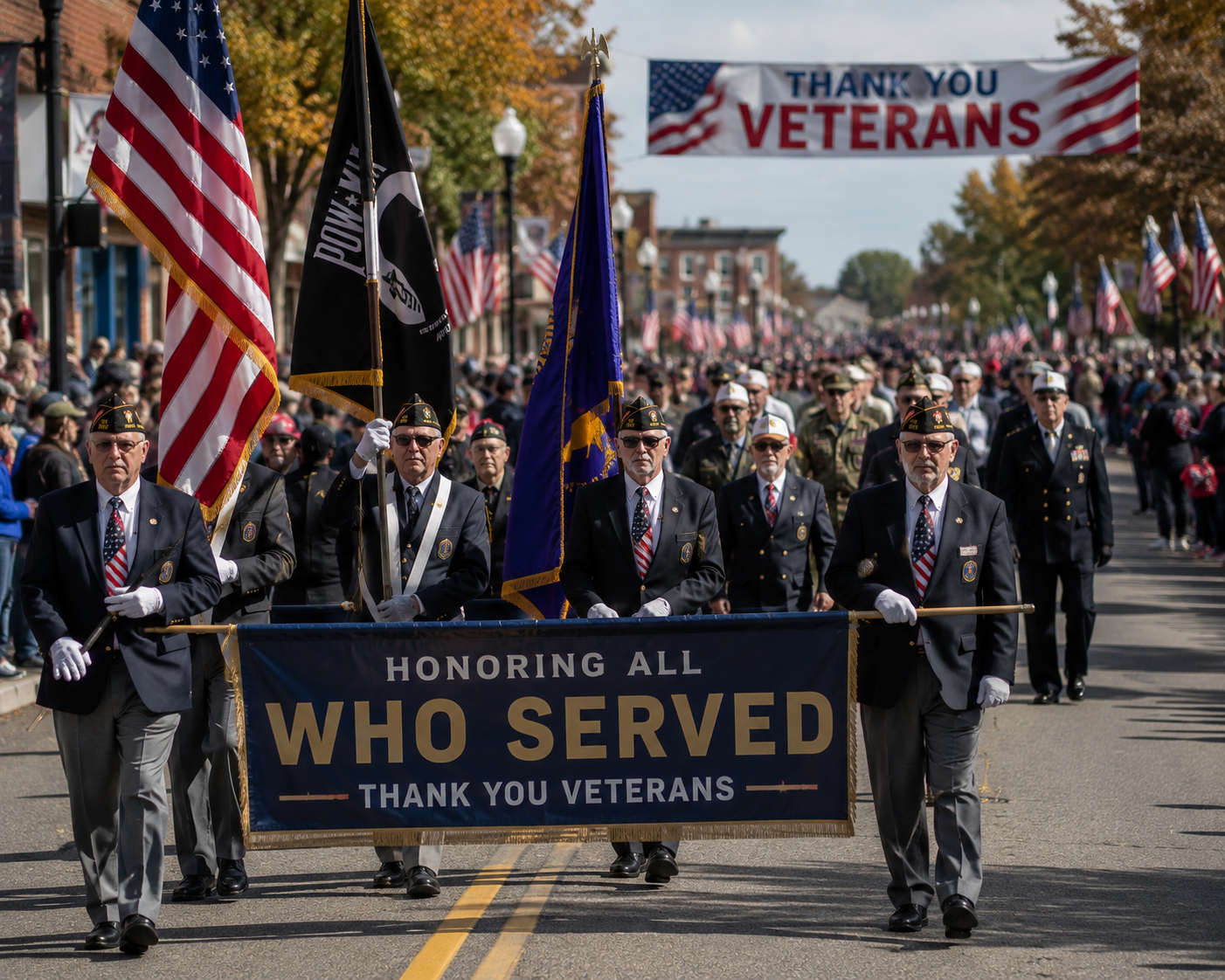
Service creates obligations. The country has to keep them.
We support full VA funding and staffing, expanded post-deployment healthcare including burn-pit and toxic-exposure recognition, defense of the GI Bill against for-profit-college predation, expanded mental health access for service members and veterans, and modernization of the Uniform Code of Military Justice.
Pillars
Where we plant our flag
Full VA capacity
VA staffing, funding, and infrastructure adequate to actual demand. Resist privatization-by-defunding patterns that have repeatedly emerged.
Toxic exposure
PACT Act implementation, expanded burn pit and Agent Orange recognition, Camp Lejeune accountability, post-9/11 toxic-exposure presumptive conditions.
Mental health
Veterans suicide prevention. Expanded access to therapy and medication. Suicide-prevention research at scale. Crisis line resourcing.
Defend the GI Bill
Restore the 90/10 rule. Crack down on for-profit colleges that target veterans. Strengthen borrower-defense for veterans defrauded by predatory schools.
Military justice
Continued movement of major felonies out of the chain of command. Sexual assault and harassment accountability. Reform of court-martial procedures.
Facts on file
What's actually true
- The VA serves roughly 9 million veterans through the Veterans Health Administration; total veterans population is roughly 18 million.
- Veteran suicide rates have remained roughly 1.5x the general adult rate over the past decade despite increasing federal investment in prevention.
- The PACT Act (2022) expanded VA presumptive-condition coverage for post-9/11 veterans exposed to toxic substances; implementation has produced over a million additional benefit claims.
- The 90/10 rule limits for-profit colleges to 90% federal financial aid revenue, with veterans' GI Bill counted as private revenue — creating a predatory incentive that the 2022 reform partly addressed.
- The Camp Lejeune Justice Act of 2022 enabled long-blocked legal claims by veterans and family members harmed by base water contamination from 1953-1987.
- Sexual assault prosecutions in the military have shifted out of the chain of command for major felonies since 2022 reforms; outcomes are early but generally positive.
- The VA disability-claims backlog has fallen sharply, from roughly 264,000 in January 2025 to about 83,000 by April 2026; appeals processing remains a chronic concern.
In context
Read the issue
The federal commitment to veterans is among the most consistently bipartisan in American politics, and among the most consistently underfunded relative to the rhetoric. Service members enlist and deploy under specific commitments — about healthcare, education benefits, mental health support, post-service transition assistance, and, in the most fundamental sense, recognition. The federal government’s record in keeping those commitments is uneven.
The five sub-topics below — VA capacity, toxic exposure, mental health, GI Bill defense, and military justice — are the load-bearing fights. The first determines whether the system can serve the veterans who turn to it. The second determines whether decades-old exposure-related conditions get recognized. The third addresses the most visible failure pattern. The fourth defends the most generous education benefit program in US history against predatory exploitation. The fifth completes a structural reform of military criminal law that has been overdue for decades.
What we try to bring to this issue is the same thing we bring to every issue: facts on the record, plain-language explanation of what’s at stake, and tools for constituents — including service members, veterans, and their families — to weigh in on legislation that shapes their access to commitments the country has made. The people who serve do not, in general, want to be a political prop. They want the system to deliver. The work of advocacy is to make that delivery more reliable.
Sub-topics
The conversation, broken down
VA capacity
Why staffing and funding determine whether the VA can deliver on its statutory mandate.
The Veterans Health Administration is the largest integrated healthcare system in the United States, serving roughly 9 million veterans through facilities across the country. Its quality of care has been a periodic political controversy, with high points (post-2014 reforms produced measurable quality improvements) and low points (the 2014 Phoenix wait-time scandal, the 2018 controversies over Choice/Mission Act implementation). The structural pattern: VA capacity is consistently below demand, and the political response has oscillated between expanding internal capacity and outsourcing to private providers under various 'choice' programs. The empirical record on outsourcing is mixed — some private-provider arrangements work well; others produce worse outcomes at higher cost than internal VA care. Reform priorities: VA staffing increases (the agency has been chronically understaffed across providers, support staff, and administrative roles, and shed roughly 40,000 employees in 2025 with about 26,000 further VHA reductions planned via attrition); facility infrastructure investment (many VA facilities are decades old); IT modernization that doesn't repeat the multi-year, multi-billion-dollar EHR rollout problems; and resistance to privatization-by-defunding patterns that periodically advance under the political guise of 'choice' for veterans.
Toxic exposure
What the PACT Act did, and what implementation looks like.
Service members across multiple eras have been exposed to toxic substances with documented long-term health consequences: Agent Orange in Vietnam, depleted uranium in the Gulf War, burn pits at forward operating bases in Iraq and Afghanistan, fuel and chemical exposures across multiple deployments, and the contaminated water at Camp Lejeune from 1953-1987. The federal recognition of these exposures and corresponding healthcare and benefits has been chronically delayed. The 2022 PACT Act represented the most significant expansion in toxic-exposure recognition in decades — adding presumptive conditions for post-9/11 veterans, expanding Agent Orange-related conditions, and authorizing substantial new VA capacity to handle the resulting claims. Implementation has been challenging at scale: over a million additional claims have been filed, processing times have stretched, and the appeals queue has grown. The Camp Lejeune Justice Act of 2022 separately enabled long-blocked legal claims; the resulting litigation is one of the largest mass tort actions in US history. Reform priorities: full PACT Act implementation funding, expanded staffing for benefits processing, faster recognition of additional exposure-condition links as scientific evidence accumulates, and resistance to backsliding on presumptive coverage.
Mental health
Why veteran suicide rates remain stubbornly elevated despite increasing investment.
Veteran suicide rates have remained roughly 1.5x the general adult rate over the past decade. The federal investment in veteran suicide prevention has grown substantially over the same period — VA mental-health staffing, the Veterans Crisis Line (988 Press 1), peer-support programs, suicide-prevention research, expanded medication access for evidence-based treatments. The pattern of stubbornness is itself an important data point: it suggests that the structural drivers (combat trauma, social isolation, firearm access, transition-to-civilian-life difficulty, substance use, healthcare access barriers) are not fully addressed by clinical interventions alone. Reform priorities span clinical and structural axes. Clinical: continued expansion of evidence-based therapies (Cognitive Processing Therapy, Prolonged Exposure Therapy, EMDR for PTSD; ketamine and adjacent treatments for treatment-resistant depression where evidence supports), expanded medication-assisted treatment for substance use, and integrated primary-care/mental-health models. Structural: lethal-means safety interventions (firearm safe-storage support, time-delayed access for acute crisis), peer-support program scaling, transition-period support for separating service members, and homelessness-prevention coupled with mental-health support. The Solid Start program (proactive outreach to recently separated service members) has shown promising early results.
GI Bill defense
Why for-profit colleges have systematically targeted veterans, and what to do about it.
The Post-9/11 GI Bill is one of the most generous federal education-benefits programs in US history. It has also been a magnet for predatory practices by certain for-profit colleges, which have systematically targeted veterans because of a structural quirk in federal regulation: the 90/10 rule (limiting for-profit colleges to 90% of revenue from federal financial aid) historically excluded GI Bill payments from the federal-aid count, treating them as 'private' revenue. The result was that for-profit colleges had a strong incentive to enroll veterans, who didn't count against the federal-aid cap and could compensate for any overage from regular Pell and Direct Loan recipients. The 2022 reform addressed this loophole. The follow-on agenda: aggressive enforcement of the updated 90/10 rule, expanded borrower-defense relief for veterans defrauded by closed for-profits, and structural reform of the for-profit college sector that doesn't depend on each scandal producing each reform. The Veterans Education Empowerment Act and similar proposals address aspects of this; full implementation requires Department of Education and VA capacity to execute.
Military justice
What changed with the 2022 reforms, and what's next.
The military justice system, governed by the Uniform Code of Military Justice (UCMJ), has historically placed prosecution decisions for major felonies (including sexual assault and harassment) within the military chain of command. Service members and advocates raised structural concerns about this for decades — that commanders' interests in unit cohesion, manpower, and readiness can conflict with prosecution decisions, and that the chain of command itself can be implicated in alleged offenses. The 2022 NDAA reforms moved decisions on a defined list of major felonies (including sexual assault, sexual harassment, child pornography, retaliation, and others) to independent special trial counsel offices outside the chain of command. The reforms went into effect in 2023-24 and represent the most significant restructuring of military justice in decades. Early outcomes are positive but provisional. Continued reform agenda: expansion of the offense list to additional categories, full staffing of the special trial counsel offices, parallel reforms in the Coast Guard and National Guard, and structural review of court-martial procedures (including jury selection and minimum jury size) that have lagged civilian-court evolution.
Legislation
Key bills to watch
| Bill | What it does | Status |
|---|---|---|
| PACT Act / Honoring Our PACT Act federal | Largest expansion of VA toxic-exposure benefits in decades; presumptive conditions for post-9/11 veterans, expanded Agent Orange coverage, additional VA capacity. | Enacted Aug 2022; claims backlog cut to ~83,000 by Apr 2026; new presumptive conditions added 2026 |
| Camp Lejeune Justice Act federal | Authorizes legal claims by veterans and family members harmed by Camp Lejeune water contamination from 1953-1987. | Enacted in PACT Act; ~$421M paid, first bellwether trials set for 2026, under 1% of 400,000+ claims resolved |
| VA appropriations / staffing federal | Annual appropriations bills determine VA staffing levels; recent years have included substantial increases. | VA shed ~40,000 employees in 2025; ~26,000 further VHA cuts planned via attrition |
| GI Bill 90/10 reform federal | Updated 90/10 rule to count GI Bill and DOD tuition assistance as federal aid for purposes of the for-profit revenue cap. | Enacted 2021; implementation phasing in |
| Sexual Assault Prosecution Reform (NDAA 2022) federal | Moved prosecution decisions for major felonies, including sexual assault, out of the military chain of command. | Enacted 2022; implementation 2023-24 |
| Vet Center expansion federal | Federal funding for community-based Vet Centers providing mental health and counseling services to veterans. | Periodic appropriations expansions |
| Solid Start federal | VA program providing proactive outreach to recently separated service members during transition. | Operational; subject to annual funding |
| Forever GI Bill federal | Eliminated the 15-year usage limit on GI Bill benefits; expanded eligibility for purple-heart recipients and certain other categories. | Enacted 2017; ongoing implementation refinements |
Who's affected
Who carries the cost, who reaps the benefit
Veterans and service members are not a homogeneous population, and policy effects fall unevenly across subpopulations.
Post-9/11 veterans bear the most direct effects of toxic exposure recognition (PACT Act), military justice reforms (which apply to active-duty service and recent veterans), and post-deployment mental-health programs.
Vietnam-era veterans benefit most directly from Agent Orange recognition expansion. Korean War and World War II veterans face long-term care needs that intersect both VA capacity and Medicare/Medicaid systems.
National Guard and Reserve members face particular gaps in benefits and services — the framework was historically designed for active-duty service, and full coverage for activated reservists has been phased in over time. Many Guard and Reserve members face employment, family, and healthcare disruption that the active-duty support infrastructure handles more comprehensively.
Women veterans, who now make up roughly 10% of the veteran population and a higher share of recent veterans, face documented gaps in VA infrastructure designed largely around male veterans (gynecological services, mental health for military sexual trauma, women-specific facilities). Reforms have addressed many of these gaps but uneven coverage persists.
Veterans with mental-health needs face the structural patterns above. Veterans experiencing homelessness face HUD-VASH and similar programs that have produced measurable reductions in veteran homelessness over the past decade — one of the more successful federal homelessness interventions.
Family members of veterans bear secondary effects across most of these domains: the spouse, child, and dependent provisions of the GI Bill; the survivor benefits structure; the family caregiver support program. The Camp Lejeune contamination affected both veterans and their families directly; the Justice Act recognized this.
The benefits of inadequate veterans' policy infrastructure flow to for-profit colleges that have systematically targeted veteran enrollees, to political actors who use veterans' interests as a rhetorical resource without funding the corresponding programs, and to the broader pattern in which an underfunded VA is presented as evidence that the public sector cannot deliver healthcare — a narrative the empirical record consistently contradicts.
Timeline
How we got here
- Servicemen's Readjustment Act (original GI Bill) passes.
- Selective Service ends; All-Volunteer Force begins.
- Agent Orange Act establishes presumptive conditions for Vietnam veterans.
- Post-9/11 GI Bill enacted, substantially expanding education benefits for post-9/11 veterans.
- Phoenix VA wait-time scandal triggers Veterans Choice Program and substantial VA reforms.
- Forever GI Bill eliminates the 15-year usage limit.
- MISSION Act expands community-care options for veterans.
- 988 Veterans Crisis Line implementation; expanded peer-support programs.
- 90/10 rule reform: GI Bill counted as federal aid for for-profit revenue cap.
- PACT Act / Camp Lejeune Justice Act enacted (toxic-exposure expansion). NDAA moves military sexual assault prosecutions out of chain of command.
- Major felonies prosecution reform implementation. PACT Act claims processing surges. Camp Lejeune litigation expansion.
- Continued PACT Act implementation; ongoing VA staffing pressure; further military justice reform proposals; Solid Start expansion.
- Congressional report documents a roughly 40,000-job VA workforce contraction in 2025, the large majority in healthcare.
- VA releases the 2025 Veteran Suicide Prevention Report; rates remain elevated despite sustained prevention investment.
- VA reports the disability-claims backlog cut to roughly 83,000 at a House Veterans' Affairs Committee hearing.
Glossary
Plain-language definitions
- VA / Department of Veterans Affairs
- Federal department serving US veterans through the Veterans Health Administration (healthcare), Veterans Benefits Administration (compensation, pensions, education benefits), and National Cemetery Administration.
- Veterans Health Administration (VHA)
- The largest integrated healthcare system in the US, serving roughly 9 million veterans through 1,300+ facilities.
- GI Bill / Post-9/11 GI Bill
- Federal education benefits for veterans. The Post-9/11 GI Bill (2008) is the current benchmark; the Forever GI Bill (2017) eliminated the prior 15-year usage limit.
- Presumptive condition
- VA-recognized health condition presumed to be related to military service for purposes of disability compensation. Reduces the burden of proof for veterans claiming exposure-related conditions.
- PACT Act
- The Honoring Our PACT Act of 2022 — the largest expansion of VA toxic-exposure benefits in decades. Added presumptive conditions for post-9/11 veterans and expanded Agent Orange coverage.
- UCMJ
- Uniform Code of Military Justice — the federal statute governing military criminal law and court-martial procedures. Subject to ongoing reform.
- Article 32 hearing
- Pretrial hearing in military criminal cases (analogous to a civilian preliminary hearing or grand jury proceeding). Procedures revised by recent reforms.
- Veterans Crisis Line
- 988 Press 1 (or text 838255) — the federally funded crisis line for veterans, service members, and their families.
- MISSION Act / Choice
- Frameworks under which the VA refers eligible veterans to private providers when VA care doesn't meet specified access standards. Subject to ongoing implementation and political contestation.
- 90/10 rule
- Federal regulation limiting for-profit colleges' revenue from federal financial aid to 90%. Updated in 2021 to count GI Bill and DOD tuition assistance against the cap.
Research
Briefs on this issue
Brief
Camp Lejeune, four years on
The 2022 law gave Camp Lejeune water-contamination victims a path to compensation. Four years later, roughly $421 million has been paid — and less than 1% of more than 400,000 claims has been resolved.
Brief
The VA workforce contraction
The VA shed roughly 40,000 employees in 2025 — most of them in healthcare — and plans to cut 26,000 more by attrition. What that does to veterans' access to care.
Brief
Why for-profit colleges target veterans, and what reform is starting to do
The 90/10 loophole, the predatory marketing pattern, and the structural reforms that have begun to address them.
Brief
PACT Act implementation, two years in
What the largest expansion of veterans' toxic-exposure benefits in decades has actually produced — and where the bottlenecks have been.
Engage
What you can do
Letters
- To a US Senator: defend the GI Bill against for-profit college predation The 2021 90/10 reform was a win. Continued enforcement, the gainful employment rule, and borrower-defense protection for veterans need ongoing defense.
- To a US Representative: push for VA staffing and PACT Act implementation funding PACT Act delivered. Implementation requires sustained appropriations to clear backlogs and maintain healthcare capacity.
Actions
- Push for VA staffing and PACT Act implementation funding PACT Act delivered. Implementation requires sustained appropriations to clear backlogs and maintain healthcare capacity. Find a letter template →
- Defend the GI Bill against for-profit college predation The 2021 90/10 reform was a win. Continued enforcement, the gainful employment rule, and borrower-defense protection for veterans need ongoing defense. Find a letter template →